

In Africa, school attendance management has long faced thorny challenges: manual attendance taking up classroom time, the persistent phenomenon of proxy clock ins, and difficulty in synchronizing attendance records with parents in real time. What is even more troublesome for the school is that some students sign or brush on behalf of each other, resulting in serious distortion of attendance data. Parents cannot grasp their children's actual attendance situation, and the school also finds it difficult to accurately evaluate students' attendance performance. In response to these pain points, HFSecurity, as a professional biometric solution provider, has launched a palm vein attendance system - students only need to collect palm vein information in advance, and can complete identity verification and check-in by raising their hand in classrooms, libraries, dormitories, and other places. The entire process does not require contact with any devices, nor do they need to carry cards or mobile phones. It has been successfully deployed in many schools in Africa.
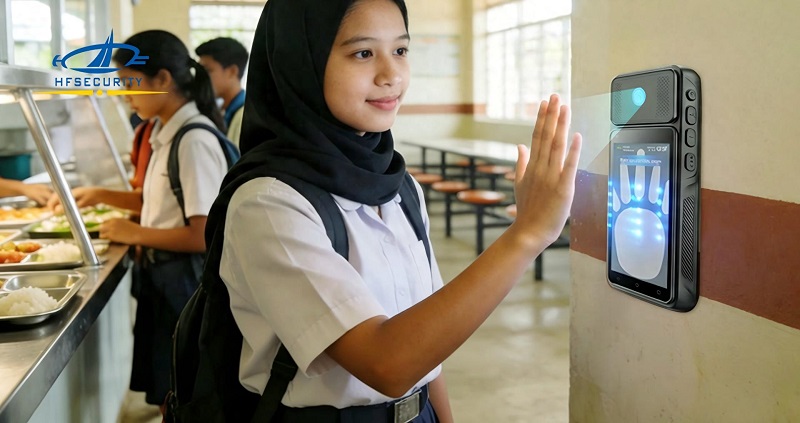
The drawbacks of traditional campus attendance methods are becoming increasingly apparent in practical use. Manual roll call by teachers not only takes up a lot of classroom time, but is also more difficult in large class teaching; Although IC cards or fingerprint attendance have partially replaced manual attendance, the phenomenon of proxy clocking in is difficult to prevent - students swipe on each other's behalf, and managers have no way to verify whether they have personally checked in, resulting in serious distortion of attendance statistics. At the same time, the school lacks real-time attendance data synchronization methods, and parents cannot timely know their children's attendance status, resulting in an information gap in communication between home and school. Managers urgently need a attendance method that can not only eliminate clock ins, but also achieve contactless and stable recognition.
The palm vein recognition technology provided by HFSecurity uses near-infrared light to read the distribution of subcutaneous veins in the palm, forming unique biometric features for each individual. Venous features belong to the internal physiological structure of the human body, hidden beneath the skin of the palm, and are extremely difficult to replicate or forge. They must be live in order to pass verification - even if someone obtains another person's palm vein image, it cannot be used for attendance check-in. This technology adopts a dual factor verification mechanism of "palm print+palm vein", and only when both are matched can verification be completed, completely eliminating the act of proxy check-in from a technical perspective.
Compared to fingerprints, students' palms do not affect recognition due to sweating during exercise, moisture after washing hands, or skin abrasion; Compared to human faces, it is not affected by light, masks, or changes in hairstyle. The palm vein has a large number of blood vessels and a wide identification range, and is recognized as one of the highly safe and stable biometric technologies. This feature completely blocks proxy clock in behavior, ensuring the authenticity and accuracy of attendance data.
Classrooms, auditoriums, and other areas are densely populated, and attendance equipment is frequently used by multiple people. Hygiene issues cannot be ignored. The entire process of palm vein attendance does not require contact with the surface of the equipment, and students can sign with their hands, effectively avoiding the risk of bacterial residue or cross infection on the fingerprint sensor. At the same time, palm vein recognition is not affected by conditions such as wet, peeling, or stained fingers - even if students have sweat on their hands after exercise, have not dried their hands after washing, or have stains on their hands, the recognition success rate remains at a very high level. The entire process from entering palm information to completing check-in only takes 1 to 2 seconds, and millisecond level recognition greatly reduces attendance time, allowing teachers to devote more energy to teaching itself.
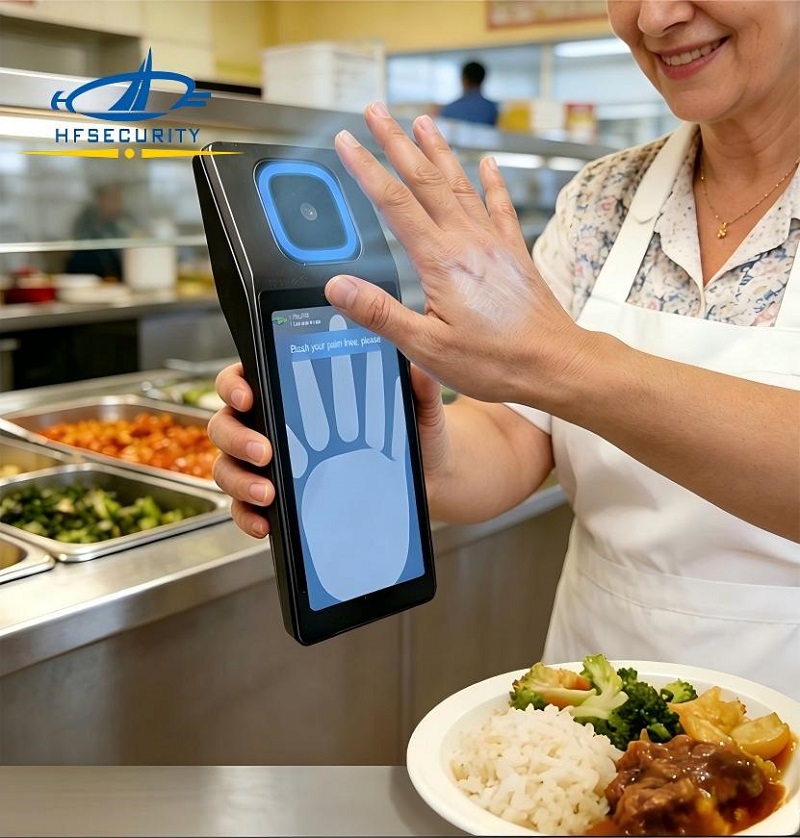
The original campus management system of the school has been in operation for many years, and the school usually does not want to demolish and rebuild it. The free SDK and complete API interface provided by HFSecurity enable the school's technical team to complete system integration with minimal cost. Developers can seamlessly embed the palm vein recognition module into existing campus management platforms: when students register, they can lift their hand in front of the terminal for a few seconds to complete palm vein collection and bind it with their student ID; During daily check-in, gently lift your hand on the recognition device at the entrance of the classroom, library, or dormitory, and the system will automatically identify your identity and record the check-in time. The attendance report will be generated in real-time in the background. The homeroom teacher can check the attendance status of the class in real time through the computer or mobile phone, and parents can also understand their children's attendance status through the system.
HFSecurity has over 20 years of experience in the development and manufacturing of biometric devices. It not only provides standardized palm vein attendance terminals, but also offers customers full process OEM/ODM customization services from hardware appearance to software platform. The installation method, prompt voice, and operating interface language of the recognition device can be customized according to the actual environment of the school. For integrators or educational institutions with special needs, we can also provide a private deployment solution to ensure that all biometric data is stored on the customer's local server, meeting data security and compliance requirements.
From Kenya to South Africa, from Nigeria to Tanzania, palm vein attendance is reshaping the campus management experience in Africa. Students do not need to carry cards or wait in line for roll call; Teachers do not need to spend classroom time manually checking in, nor do they need to worry about the inability to trace proxy clock ins; The school does not need to handle attendance disputes or bear the responsibility for parental complaints caused by inaccurate data. HFSecurity will continue to delve into educational scenarios, using an open technology platform and reliable hardware quality to promote palm vein attendance as a new standard for smart campuses in Africa.