

The office buildings and parks in Johannesburg, Cape Town, and Durban, the commercial centers of South Africa, have continuously increased their requirements for personnel access management and attendance efficiency in recent years. Traditional access cards and independent attendance machines have gradually exposed many shortcomings in anti-counterfeiting, data collaboration, and peak traffic periods - cards are easily borrowed or copied, attendance data and access records are separated from each other, and HR needs to spend a lot of time manually verifying them every month. In addition, the flow of people at the entrance and exit of the office park is complex, and there is a lack of systematic management for visitors, express delivery, and temporary personnel. The risk of tailgating and intrusion cannot be ignored. In response to these pain points, HFSecurity has launched an integrated attendance swing gate ban solution, which deeply integrates multimodal recognition attendance terminals with channel swing gates, and works with the HFIMS management platform to help South African enterprises achieve "attendance for passage, regional grading control, and full data connectivity".
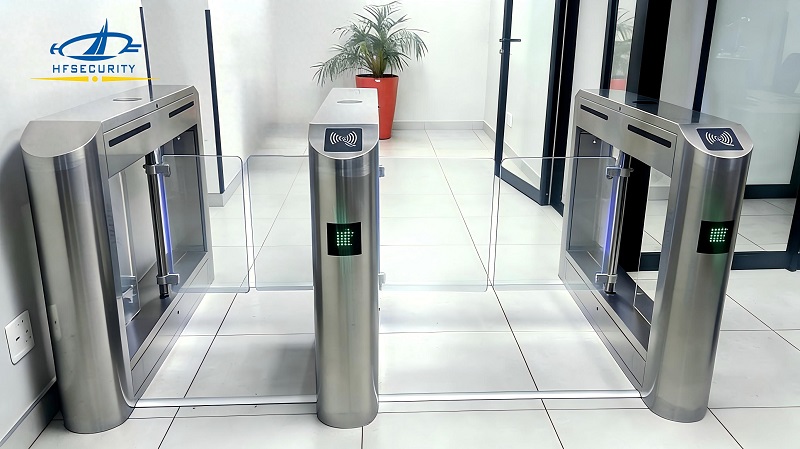
The office environment of South African enterprises generally faces multiple challenges. Firstly, the phenomenon of proxy clock in has persisted despite repeated bans, with employees swapping their work cards for each other, resulting in distorted work hour statistics and frequent errors in salary accounting. Secondly, the access control and attendance systems are independent of each other, and employees need to clock in separately after swiping their cards to enter the office. The process is cumbersome and the data cannot be automatically associated. Furthermore, the personnel at the entrance and exit of the office park are mixed - visitor registration relies on paper records, and there is a lack of effective control over the entry and exit of temporary personnel such as express delivery and food delivery, which not only poses safety hazards but also brings additional burden to the front desk. The South African Labor Code (BCEA) has strict requirements for recording working hours, and inaccurate attendance data may lead to labor disputes and compliance risks. Managers urgently need an integrated access control system that can accurately identify identities, automatically record attendance, and regulate visitor entry and exit.
The core of the HFSecurity solution is to integrate attendance terminals with channel turnstiles. Swing gates have the characteristics of fast opening and closing speed and high traffic efficiency. A single channel can handle dozens of passes per minute, especially suitable for scenes with concentrated morning and evening crowds such as office building lobbies and main entrances to office parks. After employees complete facial recognition, fingerprint or card swiping verification before opening the gate, the gate flap quickly opens for release, and the system synchronously records the entry time and personnel information - completing the authorization and attendance registration in one action, completely eliminating the management blind spots of "forgetting to pass the gate after clocking in" or "not clocking in after passing the gate". The swing gate adopts a flexible wing plate design, which is sensitive to opening and closing, and has anti pinch function to ensure the safety of employee passage. For enterprises with multiple office areas or floors, independent swing gates can be deployed at different entrances and exits, and differentiated access permissions can be set for employees of different departments or job levels through the backend - ordinary employees are only allowed to enter the office area, and management can additionally authorize access to meeting rooms or specific project areas. The gate body is made of stainless steel material, with a modern and simple appearance that is in harmony with the high-end office building decoration style.
The HFSecurity attendance terminal supports various verification methods such as facial recognition, fingerprint recognition, QR code scanning, and IC card, and enterprises can flexibly configure according to the different characteristics of their employee groups. Young employees prefer facial recognition or mobile QR code for quick access; Logistics and senior employees can continue to use IC cards; Visitors will receive a one-time QR code through the front desk, scan the code to enter the designated area within the specified time period, and the system will automatically record the entry and exit time. The device is equipped with a high-definition touch screen and voice prompts, with real-time feedback on check-in results and automatic alarm for abnormal situations. In response to the high temperatures and power fluctuations in some areas of South Africa during summer, the equipment has the ability to operate over a wide temperature range and a wide voltage input. The built-in backup battery can continue to operate in the event of a power outage, ensuring uninterrupted attendance records.
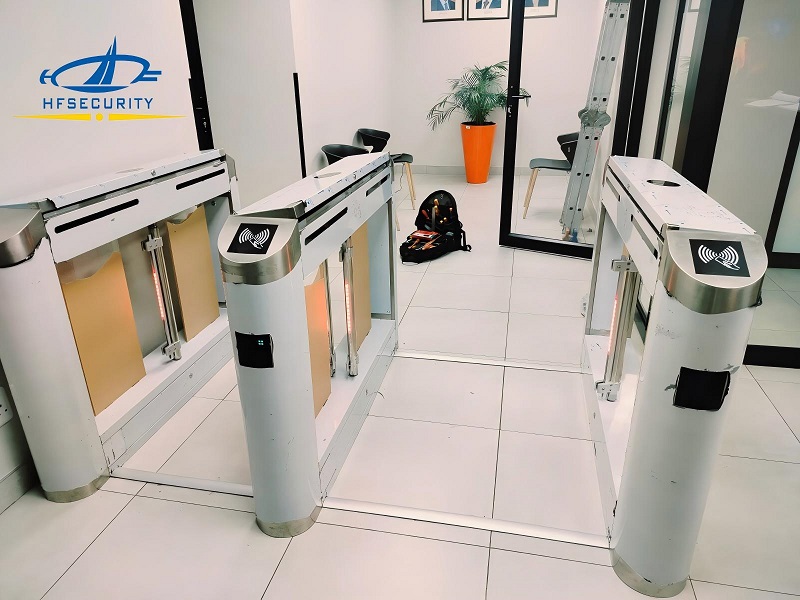
All swing gate traffic records are uploaded in real-time to the HFIMS management platform independently developed by HFSecurity. The platform is equipped with an intelligent scheduling engine that supports complex scheduling rules across multiple shifts and departments. It automatically compares traffic records with shift plans and generates standard reports such as tardiness, early departure, absenteeism, and overtime. HR can export to Excel with one click or integrate with existing salary systems of enterprises (such as Sage, PaySpace, etc.) through APIs to achieve automation of salary accounting. In terms of regional permission management, managers can set up independent authorization lists for different gate channels in the background - ordinary employees are only allowed to gate through the main entrance and cannot enter the finance room or server room; The visitor QR code is only valid for the front desk and reception area and is timed to expire. The platform also supports blacklist management, which means that any attempt by departing employees or high-risk individuals to pass through will be rejected and an alarm will be triggered. For enterprises with multiple office locations, HFIMS supports centralized monitoring of access control status and attendance data for each branch by the headquarters, achieving cross regional unified management.
Daily visitors, express delivery, food delivery and other temporary personnel entering and leaving the office park are frequent, and traditional paper registration is difficult to trace and inefficient. The HFSecurity solution supports visitor pre registration function: the interviewed employee can generate a one-time QR code for the visitor in advance through the system. After the visitor arrives, they can scan the code and pass through the gate. The system automatically records the arrival time and respondent information. Express delivery and food delivery personnel can register their identity at the security guard and receive a temporary QR code to authorize passage within a limited time. All visitor entry and exit records are automatically archived, forming a complete electronic audit trajectory, which not only improves the efficiency of front-end work, but also enhances the security control of the office area.
HFSecurity has over 20 years of experience in the development and manufacturing of biometric devices, providing multi-level customized services from hardware to software for South African enterprises and integrators. In terms of hardware, the color of the swing brake body, the silk screen printing of the brand logo, and the position of the recognition module can be adjusted as needed; In terms of software, the boot interface, system language (supporting English and Afrikaans, etc.), menu structure, and functional flow of the attendance terminal can be flexibly configured according to the actual management requirements of the enterprise. At the same time, free SDK and complete API documentation are provided. Customers can independently integrate the gate ban attendance system into their own HR, salary, or ERP platforms according to their own business needs, achieving personnel information synchronization, automatic push of attendance data, and unified management of permissions.
The demand for intelligent access control and attendance systems in the South African commercial office sector continues to grow. HFSecurity will continue to provide flexible and adaptable biometric attendance and access control solutions based on the actual needs of customers. The company relies on over 20 years of manufacturing experience, open SDK/API, and OEM/ODM customization capabilities to provide stable and reliable technical support and product services for enterprises of different sizes in South Africa, helping local office spaces achieve comprehensive digital upgrades in entrance and exit management and attendance.