

Amid the wave of digital campus development in India, universities are increasingly demanding secure, efficient, and contactless personnel identification management. Traditional attendance methods such as IC cards and fingerprints are proving inadequate in terms of anti-cheating measures, hygiene, and unified data management. Addressing this trend, HFSecurity palm vein recognition devices have been successfully deployed at an Indian university. By establishing a unified palm vein biometric database, they have achieved precise attendance management for faculty, staff, and students.
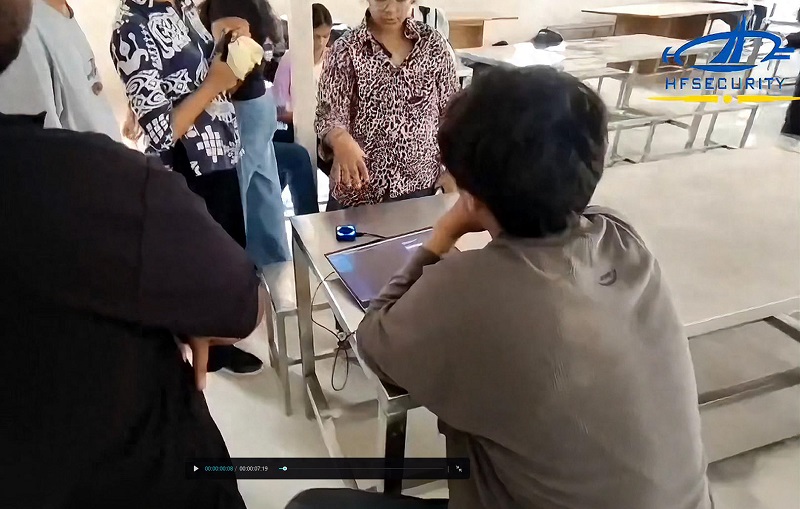
Indian universities generally face management challenges such as high staff turnover, scattered attendance data, and frequent instances of proxy attendance. Traditional card or fingerprint attendance systems not only suffer from recognition obstacles such as lost cards and worn fingerprints, but also struggle to establish a unified identity authentication system. The university's previous multi-system parallel management model resulted in attendance data being scattered across different departments, making it impossible to achieve unified personnel management and data traceability across the entire university. The university urgently needed a biometric solution that could both accurately identify individuals and manage data uniformly.
The Indian school ultimately chose HFSecurity's VP930Pro palm vein recognition device, which employs RGB and IR dual-mode camera technology, combined with high-precision optics and a high-performance ISP and AI module. The dual-camera design allows it to simultaneously capture palmprint features (RGB) and subcutaneous vein distribution (IR) on the palm surface, achieving dual authentication through "palmprint + palm vein."
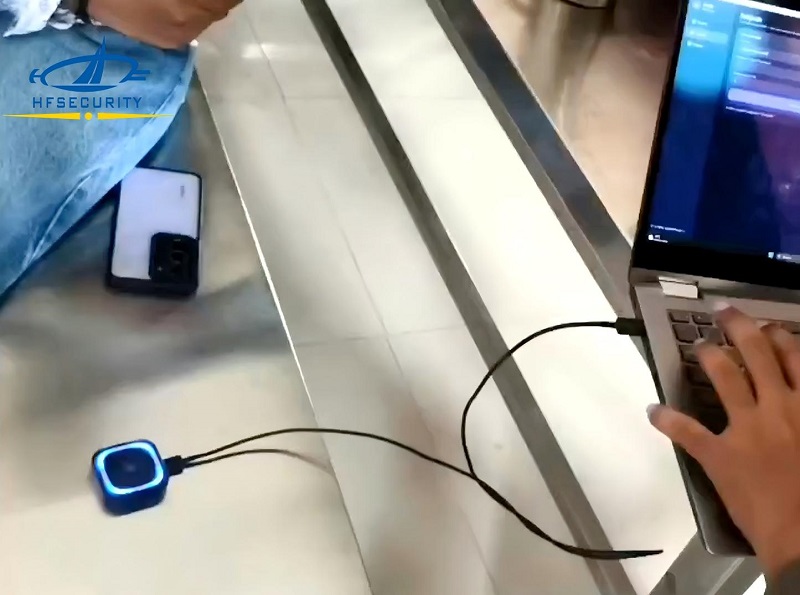
In actual deployment, the device demonstrated outstanding registration efficiency. Users simply place their palm over the device, and the system completes the collection and entry of palm vein information in a very short time. During registration, the device supports multi-angle palm capture—users do not need to consciously maintain a specific gesture; the system adaptively captures complete vein features, significantly improving the convenience and success rate of registration. The rapid registration speed provides a reliable guarantee for the school to input student and faculty information on a large scale, enabling the efficient completion of biometric profiles for thousands of students and faculty members in a short period.
With the help of HFSecurity's palm vein device, the university successfully established a campus-wide palm vein biometric database. Upon initial registration, all faculty and students have their palm vein characteristics and personal information uniformly entered into the system, forming a unique biometric ID. The establishment of this database has completely changed the previous situation of scattered and difficult-to-manage attendance data. Through this unified database, the university has achieved:
Centralized Management of Personnel Information: Palm vein characteristics and identity information of all faculty and students are uniformly archived, facilitating maintenance and updates.
Automatic Collection of Attendance Data: Each palm vein attendance record is automatically uploaded to the central database, allowing department administrators to view attendance in real time.
Cross-Scenario Identity Authentication: The same palm vein ID can be used for multiple scenarios such as library access control, laboratory access, and exam identity verification.
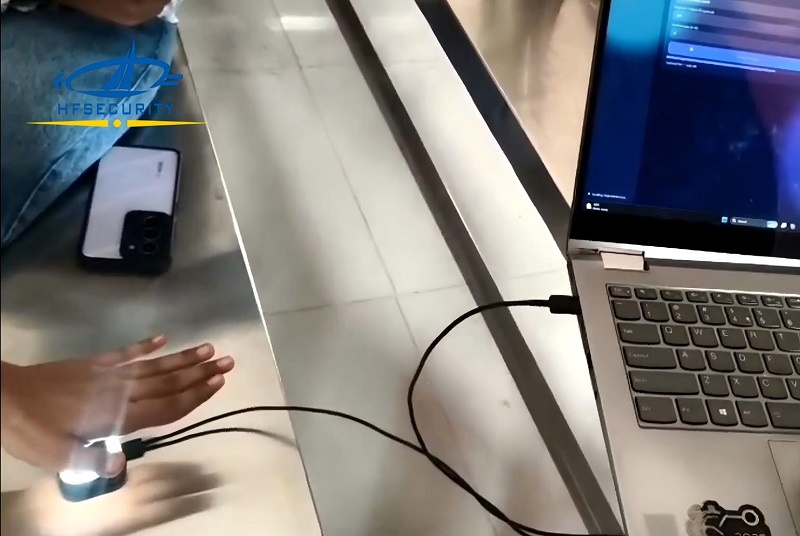
Based on the unified palm vein database, the university has built a campus-wide intelligent attendance management system. Faculty and students can simply raise their palms at attendance points to complete identity verification and check-in, without needing to carry any cards or devices. The device supports offline operation; even during network interruptions, it can still recognize and locally store access records, automatically synchronizing to the backend upon recovery to ensure no data loss. Administrators can view real-time attendance data for each department and time period through the backend. The system automatically tracks and generates visual reports on abnormalities such as lateness, early departure, and absence.
HFSecurity provides an open SDK and complete API interfaces for palm vein devices, enabling school IT teams to integrate the palm vein attendance system into existing campus management platforms or academic affairs systems. This allows for personnel information synchronization, automatic attendance data push, and unified access control. The devices support multiple operating systems, including Windows, Android, and Linux, and can be quickly integrated with existing school IT infrastructure.
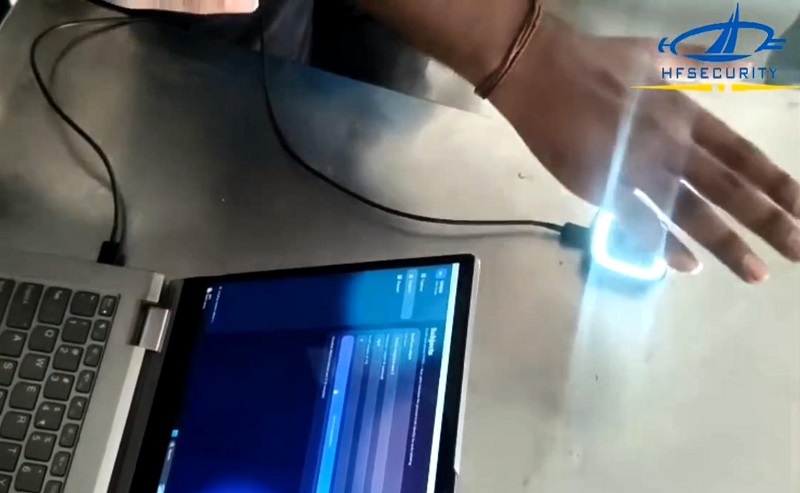
The successful deployment of HFSecurity palm vein devices in Indian universities demonstrates the broad application prospects of palm vein recognition technology in education. A unified biometric database, efficient multi-angle registration, and accurate dual-camera recognition provide schools with a complete solution from identity verification to daily attendance tracking. As the digitalization of higher education in India continues, HFSecurity will continue to leverage its reliable hardware and open customization capabilities to help more universities achieve comprehensive smart campus upgrades.