

Access management in corporate buildings has long faced a dual challenge regarding security and efficiency: employee ID badges are easily lost or duplicated; fingerprint recognition is affected by the condition of the finger; and facial recognition is susceptible to interference from lighting and face masks. For corporate buildings housing sensitive areas—such as R&D centers, data centers, and executive offices—the security risks posed by these limitations are even more pronounced. To address these needs, HFSecurity has launched an integrated palm vein access control solution that embeds palm vein recognition modules directly into entry gates (such as swing gates and flap barriers). Employees simply raise their hands to complete identity verification and gain access—a process that is entirely contactless and requires no physical credentials. This solution offers high-security corporate workplaces an entry management system that combines precise anti-spoofing capabilities with efficient throughput. The system has already been successfully deployed at numerous corporate headquarters, R&D centers, and financial office parks worldwide.
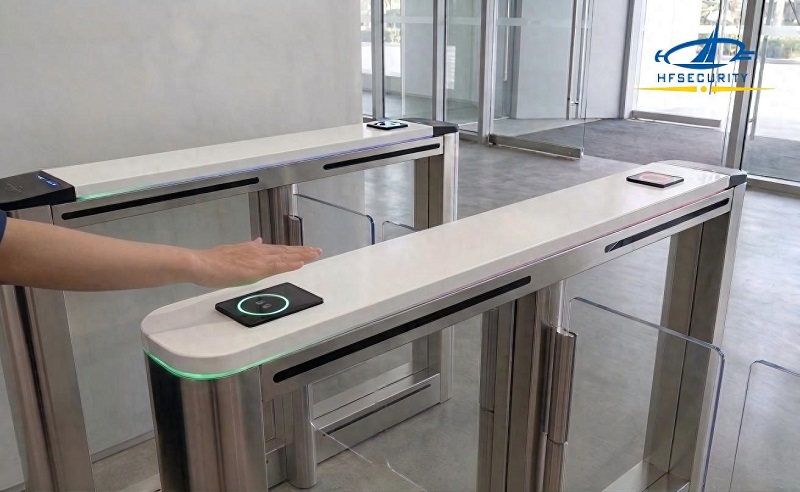
Access management for corporate buildings is far more complex than for standard offices. With thousands of daily entries and exits and concentrated traffic during peak hours, access control systems must balance efficient throughput with the prevention of tailgating and unauthorized impersonation. Traditional ID badges and access cards are easily duplicated or lent to others, and revoking access rights for departing employees often involves delays. While fingerprint recognition is widespread, failure rates are high when fingers are dry, peeling, or sweaty, and frequent retries negatively impact the user experience. Facial recognition lacks stability, as it is easily affected by lighting, angles, and the wearing of face masks.
Even more challenging is the presence of sensitive areas within corporate buildings—such as R&D laboratories, data centers, finance departments, and executive offices—which require differentiated access controls. Consequently, corporate administrators urgently need an access control system that is contactless, highly accurate, immune to external interference, and capable of completely eliminating unauthorized impersonation.
HFSecurity’s palm vein recognition module utilizes near-infrared light technology to authenticate identity by reading the structural pattern of subcutaneous veins in the palm. Palm vein patterns are internal physiological characteristics located beneath the skin of the palm; they are extremely difficult to replicate or forge and require a living subject for device reading—meaning counterfeiting methods such as photos, videos, or 3D-printed models cannot bypass verification.
Compared to fingerprint recognition, palm vein scanning requires no physical contact with the device, eliminating the risk of fingerprint replication or theft and remaining unaffected by conditions such as peeling, damp, or oily skin. Unlike facial recognition, palm vein scanning is not compromised by lighting variations, face masks, or facial angles. Widely recognized as one of the most secure biometric technologies available, it is extensively deployed in sectors with stringent security requirements, such as finance and government administration.
HFSecurity deeply integrates palm vein recognition modules into access control gates (such as swing gates and flap barriers), providing a comprehensive, all-in-one solution that covers everything from identification to passage. Employees simply raise their hands in front of the gate for verification; upon successful authentication, the gate opens automatically while the system logs the entry or exit time. This single action handles identity verification, access authorization, and time-and-attendance recording, effectively eliminating management blind spots such as "identifying but failing to pass through" or "passing through without a record." The physical structure of the gates effectively prevents tailgating by allowing only one person to pass at a time, further ensuring physical security at entry and exit points.
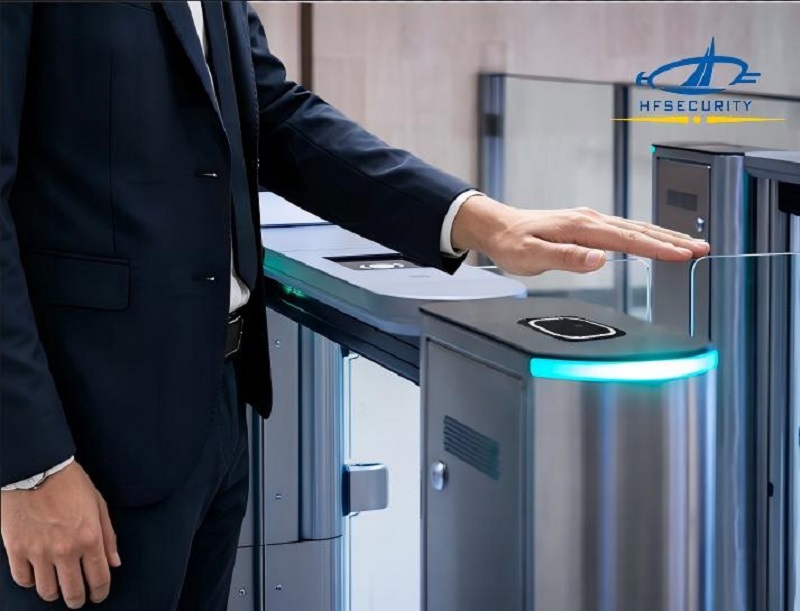
For corporate buildings with multiple office zones or floors, the system supports granular, tiered access management. Administrators can configure independent authorization lists for gates on different floors via the backend system: general employees may be permitted to enter their specific office floor via lobby gates but barred from data centers or executive areas, while R&D staff might receive additional authorization for laboratory access. Visitors can be granted temporary access—via QR codes or temporary palm vein registration—allowing them to enter designated areas through specific gates within a set timeframe. All access records are uploaded to the management system in real-time, creating a complete electronic audit trail. The system also features built-in blacklist management; once former employees or high-risk individuals are added to the list, any attempt to pass through is denied and triggers an alarm.
With over 20 years of experience in the R&D and manufacturing of biometric devices, HFSecurity provides end-to-end customization services—spanning both hardware and software—to enterprises and system integrators worldwide. In terms of hardware, the gate's exterior color, branding, and the positioning of the recognition module can all be customized to meet specific needs. On the software side, the access control system’s user interface, language settings, menu structure, and operational workflows can be flexibly configured to align with an enterprise's actual management requirements.
Additionally, HFSecurity provides a free SDK and comprehensive API documentation. This enables corporate IT teams or system integrators to rapidly integrate the palm vein gate access control system into their existing access management platforms, visitor management systems, or integrated security platforms—facilitating personnel data synchronization, unified access rights management, and the automatic transmission of entry/exit data.
From lobby gates to floor-level access points, and from data centers to executive offices, HFSecurity’s palm vein access solutions are helping enterprises worldwide upgrade their access management. These solutions leverage core features such as liveness detection, forgery resistance, and immunity to environmental interference, combined with the physical anti-tailgating capabilities of the gates themselves. Employees no longer need to carry access cards or worry about fingerprint recognition failures; administrators are spared the hassle of replacing lost cards or the risks associated with delayed access rights revocation; and visitor management becomes more standardized, secure, and traceable. Moving forward, HFSecurity remains committed to the enterprise sector, leveraging superior hardware reliability and extensive customization capabilities to establish "hand-raise access" as the new standard for high-security workplaces.