

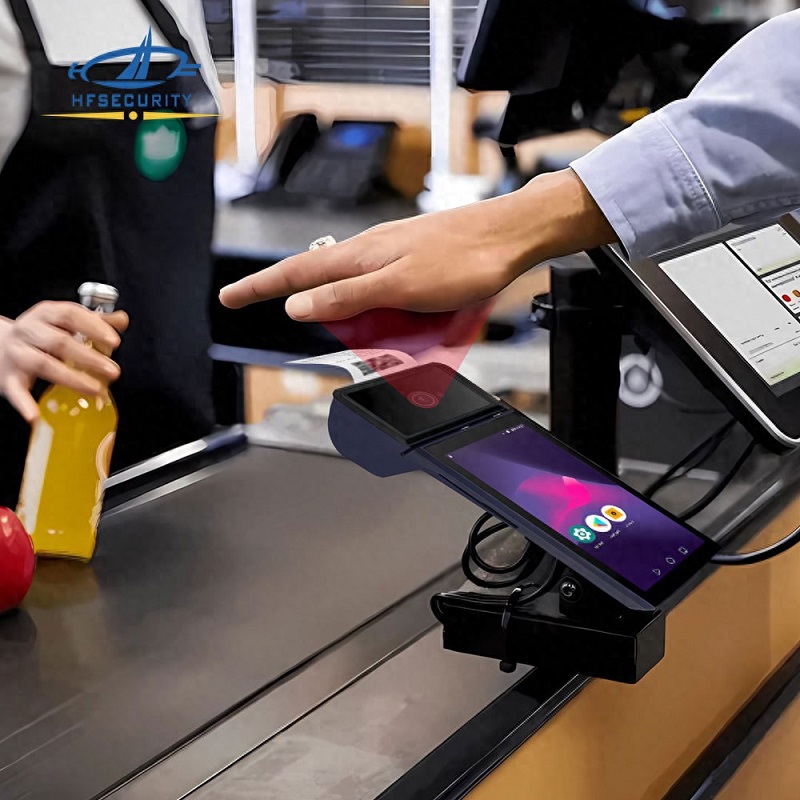
In traditional supermarket checkout scenarios, consumers often face the following problems: QR code payment requires accessing the phone, involves multiple steps, and is even more awkward when there is network latency or the phone is dead; while facial recognition payment does not require a phone, the recognition rate decreases in low light, when wearing a mask, or at an incorrect angle, and some consumers have concerns about privacy and security.
For supermarket operators, improving checkout efficiency, reducing queuing time, and mitigating payment risks are core demands. A solution that ensures both transaction security and contactless payment has become a key focus for supermarket managers.
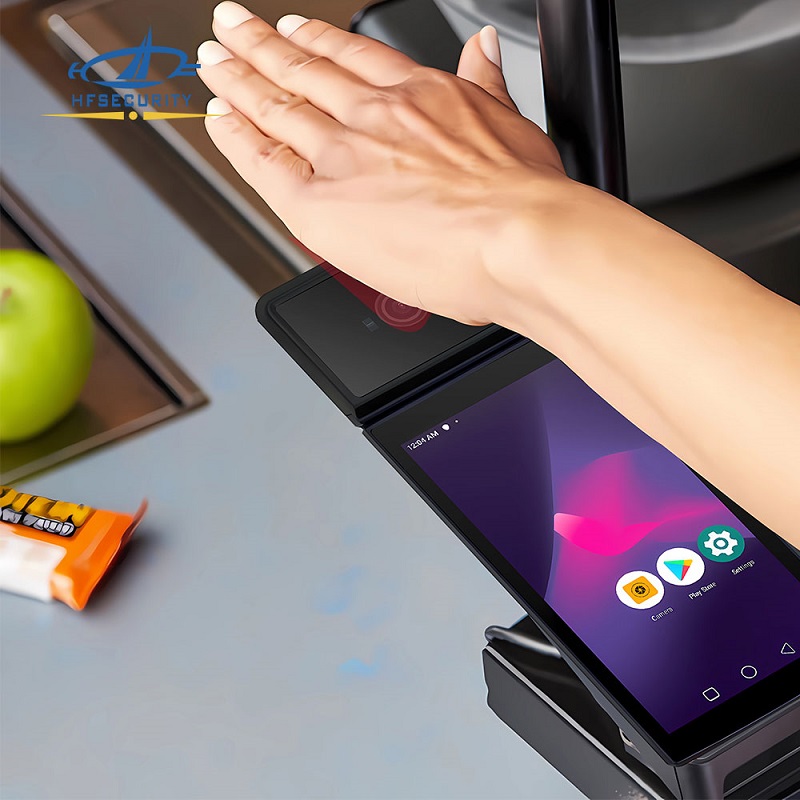
▍Palm Vein Payment: Pay with a Raise Your Hand, Secure and Contactless
HFSecurity's palm vein payment terminal utilizes advanced near-infrared palm vein recognition technology. For first-time users, simply place your palm above the device's sensing area; the system quickly collects and binds it to your payment account. At checkout, simply raise your hand again, and the system completes identity verification and automatically deducts the payment within milliseconds. The entire process requires no contact with the device, no mobile phone, or bank card—truly "swipe your hand and go."
Palm vein recognition reads the distribution structure of subcutaneous veins in the palm, a physiological characteristic that is extremely difficult to replicate or forge, and requires a living body to be read. Compared to facial recognition, palm veins are unaffected by light, masks, or makeup; compared to fingerprint payment, there are no issues with peeling skin, moisture, or dirt on the fingers; and compared to QR code payment, it does not rely on a mobile phone or internet connection. These characteristics make it an ideal choice for high-traffic, high-security scenarios in supermarkets.
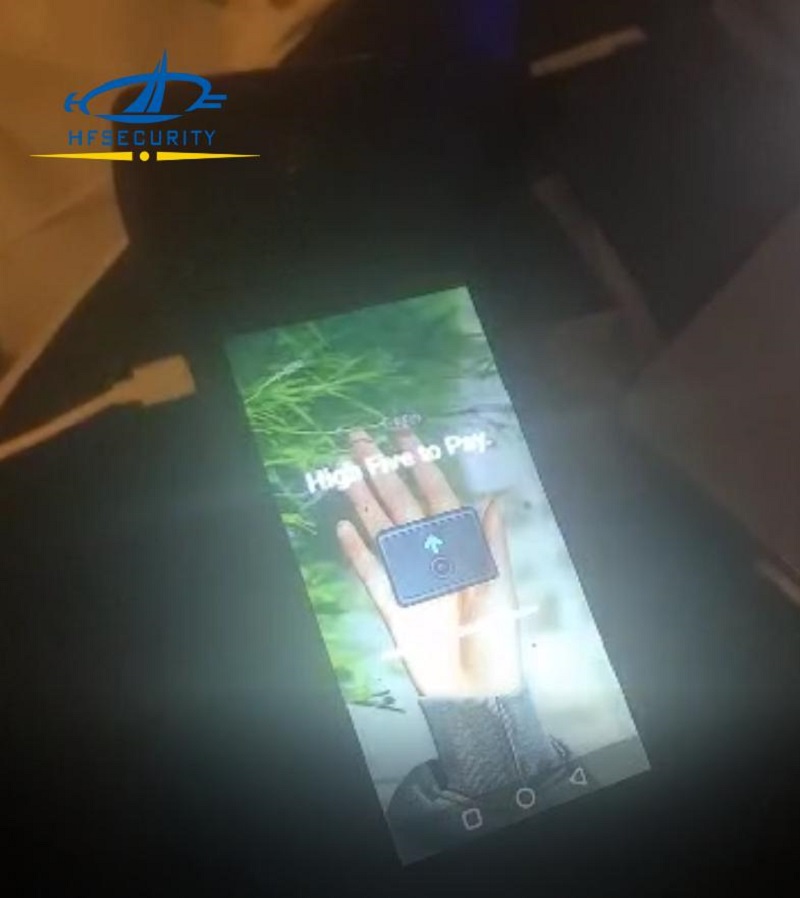
In practical supermarket applications, the HFSecurity palm vein payment solution brings multiple benefits to consumers and operators:
Significantly improved checkout efficiency: Consumers no longer need to search for their phones or wait to scan; a simple gesture completes the payment, significantly reducing transaction time and effectively alleviating queue pressure during peak hours.
Higher security: Vein features cannot be stolen or counterfeited, and liveness detection prevents forgery, providing strong protection for transaction security.
Wide applicability: Suitable for all ages and finger conditions, easily usable by everyone, bridging the digital divide.
Integrated membership identification: The system can simultaneously identify membership status, automatically accumulating points and deducting coupons without additional operation.
HFSecurity palm vein payment terminals can be flexibly deployed in various supermarket checkout scenarios:
Manual checkout counters: The terminal is placed next to the cashier; consumers can complete the payment simply by extending their hand. It can be used in parallel with barcode scanners, without requiring cashiers to change their operating habits.
Self-service checkout machines: Self-service checkout machines integrating the palm vein module allow consumers to scan items and then pay by raising their hand—a fully self-service process requiring no human assistance.
Unmanned convenience stores: As the primary payment method, combined with palm vein recognition for access control, they achieve a seamless "swipe your hand to enter, swipe your hand to pay" experience.
The equipment supports seamless integration with the supermarket's existing POS system, enabling real-time transmission and reconciliation of payment data through a standard API interface. Deployment is quick and requires no replacement of the entire POS hardware.
At a pilot store of a chain supermarket, many consumers tried palm vein payment with the guidance of cashiers. A young customer said, "I've used facial recognition payment before, but it's not convenient when wearing a mask. Palm vein payment is new, and it's especially convenient because I don't need to take out my phone." An elderly customer said, "I'm not very familiar with mobile phone operation, but now I can pay by raising my hand. I don't have to worry about forgetting my password, which makes me feel very secure."
Supermarket cashiers reported that consumers using palm vein payment generally had smooth operation, with a high recognition success rate. There were no failures due to wet fingers or lighting conditions, greatly reducing the communication burden on cashiers.
With the maturity of biometric technology and increased consumer acceptance, palm vein payment is expected to become the next generation of payment methods after QR code scanning and facial recognition. HFSecurity will continue to focus on the retail scenario, providing supermarkets and retailers with a highly secure, stable, and easily integrated palm vein payment solution to help them improve checkout efficiency, optimize the customer experience, and build a differentiated competitive advantage.
Currently, HFSecurity has released its SDK and API for palm vein payment terminals, supporting system integrators, POS equipment manufacturers, and retailers for secondary development and rapid integration. Together, we will usher in a new era of "palm-swipe payment."