

Urban rail transit systems handle millions of passengers daily, and the throughput efficiency of fare gates directly determines the operational quality of the entire network. During morning and evening rush hours, the routine of passengers queuing to tap cards, scan QR codes, or use facial recognition repeats endlessly—yet issues such as dead phone batteries, slow QR code loading, and facial recognition failures caused by masks or lighting conditions repeatedly drag down efficiency. To address these pain points, HFSecurity has launched an integrated palm vein payment gate solution. By deeply integrating palm vein biometrics with its proprietary access gates, the system allows passengers to complete identity verification and fare deduction simply by raising their hands. The process is entirely contactless and requires no physical media, offering a new payment method for rail transit that combines high security with high efficiency.
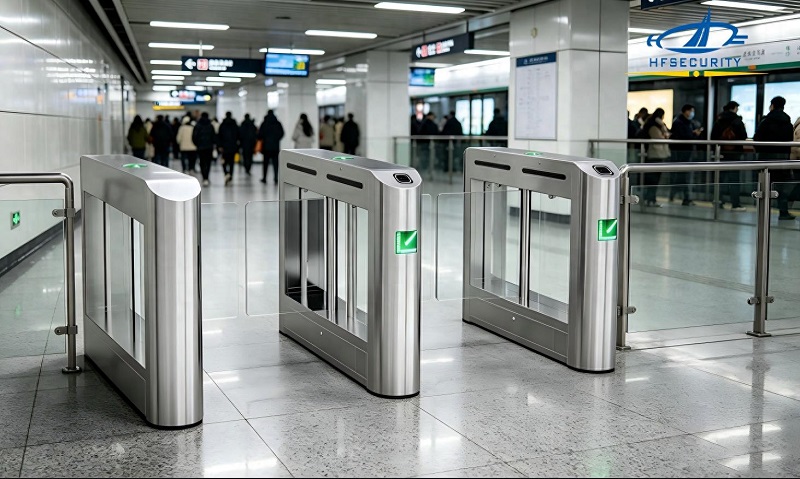
Traditional subway ticketing systems have long faced efficiency bottlenecks. Card-based travel requires passengers to purchase tickets or top up balances in advance, and physical cards are easily lost or forgotten. QR code entry relies on mobile network signals and battery life; during peak hours, network latency at the gates often causes congestion. While facial recognition enables contactless entry, its stability is compromised by factors such as poor lighting, face masks, and off-angle positioning. In subway networks with massive daily passenger volumes, even a one-second delay at the gate exponentially amplifies congestion during rush hours. Consequently, rail transit operators urgently need a payment method that is contactless, highly secure, independent of mobile phones, and unaffected by lighting or obstructions.
HFSecurity’s palm vein payment terminals utilize near-infrared light technology to read the distribution of subcutaneous veins in the palm for identity verification. As an internal physiological characteristic located beneath the skin, palm veins are extremely difficult to replicate or forge; the device requires a living subject for reading, meaning methods such as photos, screen captures, or 3D-printed models cannot pass verification. The technology employs a dual-factor verification mechanism that fuses surface palm print features with subcutaneous vein patterns. By simultaneously capturing data via visible-light and infrared cameras, the system achieves a false acceptance rate as low as one in ten million. Compared to QR code payments, palm vein payment eliminates the need for a mobile phone and does not rely on network signals or battery life, effectively resolving the awkward situation of being unable to exit a station due to a dead phone battery. Unlike facial recognition, palm vein technology is unaffected by factors such as lighting changes, face masks, or viewing angles. Compared to fingerprint recognition, palm vein scanning requires no physical contact with the device surface; this eliminates the risk of fingerprint replication or theft and avoids hygiene concerns associated with touching public equipment.
Palm vein recognition is widely recognized as one of the most secure biometric technologies available today.HFSecurity deeply integrates its palm vein recognition terminals with its proprietary access gates, offering a complete, all-in-one solution. To enter a station, passengers simply hover their palm over the recognition zone; the system automatically verifies their identity and deducts the fare, completing the entire process in just one to two seconds. The solution integrates seamlessly with existing rail transit automatic fare collection (AFC) systems, ensuring accurate data transmission and stable system operation. Additionally, the devices support offline operation, allowing recognition and local data storage to continue during network fluctuations or outages; transaction data is automatically synchronized once the network is restored, preventing ticketing system downtime caused by network issues. Passengers simply raise their hand again to exit, and the system automatically processes the payment without requiring any further action. This "wave-to-pass" and frictionless payment experience significantly reduces the time passengers spend at the gates.
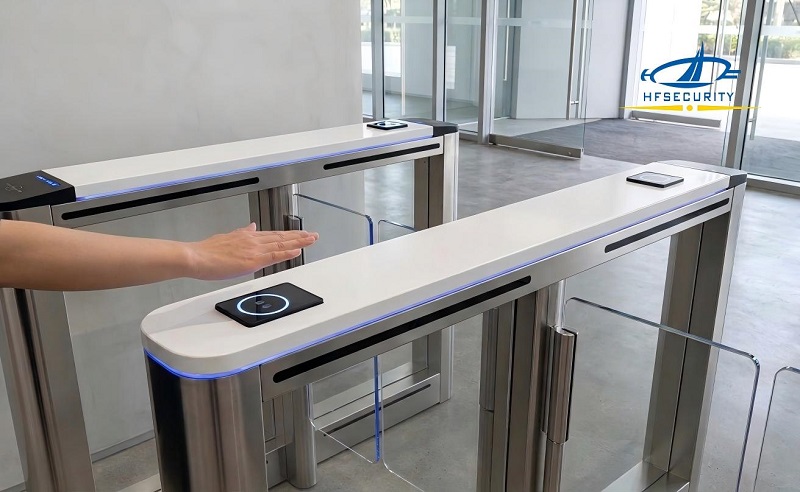
The application of palm vein payment in subway systems has been successfully validated in cities worldwide. Notably, a client in Russia has successfully deployed this solution, enabling passengers to pay fares via palm vein recognition without carrying transit cards or smartphones. Based on the unique biometric patterns of palm veins, the solution has been deployed across multiple lines, with coverage continuing to expand. From Moscow to other cities, palm vein payment is emerging as a key trend in the global upgrade of rail transit ticketing systems.
Beyond subway gates, HFSecurity’s palm vein payment solution can be extended to various other public transport scenarios, such as bus travel, high-speed rail station access, and parking lot payments. Passengers can use the same palm vein identity to enjoy frictionless transfers and payments across different modes of transportation. For operators, palm vein payment not only boosts throughput efficiency but also enhances ticketing security and data traceability through real-name travel verification.
With over 20 years of experience in the R&D and manufacturing of biometric devices, HFSecurity provides end-to-end customization services—spanning both hardware and software—to rail transit operators and system integrators. On the hardware side, the dimensions, mounting position, and branding of the gate recognition module can be tailored to specific needs; on the software side, the user interface, voice prompts, and system language can be flexibly configured to meet operational requirements. Additionally, the company offers a free SDK and comprehensive API documentation, enabling rapid integration of the palm vein payment system into existing automatic fare collection (AFC) platforms, clearing and settlement systems, and payment gateways.
Payment methods in rail transit have continuously evolved—from physical tickets and cards to QR codes, and from QR codes to facial recognition. The emergence of palm vein payment charts a new course for this evolution, offering a solution that is contactless, non-replicable, independent of mobile phones, and unaffected by lighting conditions or obstructions. Leveraging core features such as liveness detection, forgery resistance, and immunity to external interference, HFSecurity’s palm vein payment gate solutions are helping subway operators worldwide improve throughput, reduce operating costs, and optimize the passenger experience. Looking ahead, HFSecurity remains committed to the rail transit sector; by delivering superior hardware reliability and flexible customization capabilities, the company aims to establish "wave-to-pass" entry as the new global standard for urban public transportation.