

With the continuous advancement of educational informatization in Kenya, more and more schools are focusing on the intelligent upgrading of campus security and personnel access management. Traditional methods such as manual registration, paper records, or simple door locks are gradually revealing many shortcomings in terms of access efficiency, visitor control, and data statistics. In response to this market trend, HFSecurity has launched an integrated facial recognition turnstile access control solution for Kenyan schools, which has been successfully deployed in primary and secondary schools and universities across the country.
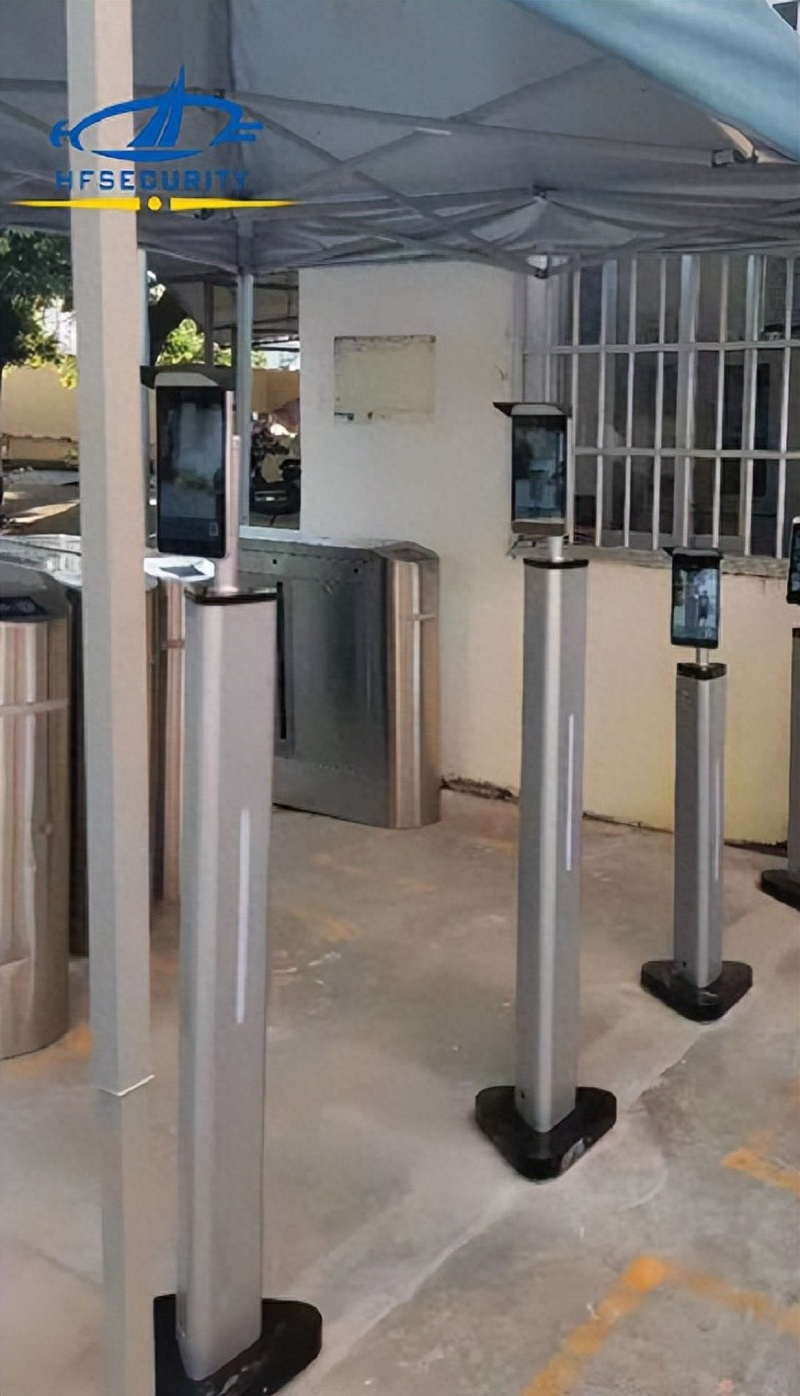
In Kenya, many schools still rely on manual security guards for access control. During peak school hours, large numbers of students enter and exit, making it difficult for security guards to verify the identities of each student, posing a security risk of unauthorized personnel entering the school. Visitor registration is mostly done by hand, resulting in incomplete and untraceable information, and visitor badges are easily forged or lent.
Furthermore, boarding schools need separate control over dormitory buildings to prevent non-resident students or unauthorized personnel from entering. A comprehensive access control system that ensures campus security, improves access efficiency, and provides data traceability has become a pressing need for many school administrators.
HFSecurity's solution for Kenyan schools uses facial recognition terminals and turnstiles as its core components. Students and staff pre-register their facial information, and upon entry or exit, they simply face the device for instant recognition, with the turnstile automatically unlocking. The entire process is contactless and requires no cards.
The terminal employs a high-precision facial recognition algorithm, supporting stable recognition in various lighting conditions and effectively preventing forgery using photos or videos. Simultaneously, the device features liveness detection, ensuring only genuine individuals can pass through. The turnstiles utilize a mechanical rotating lever design, allowing only one person to pass at a time, effectively preventing tailgating and making it suitable for schools and other locations requiring strict access control.
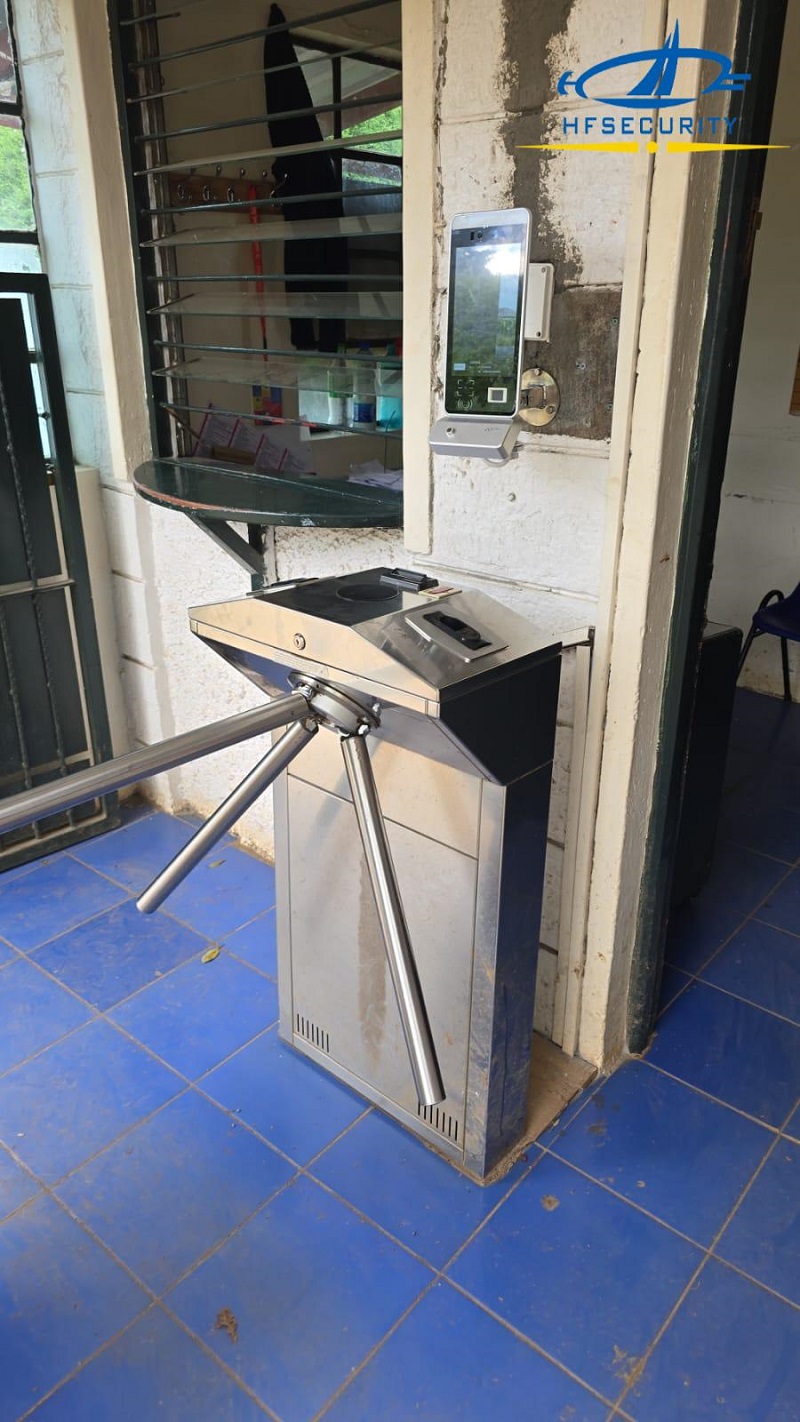
Parts of Kenya have a hot, dry climate, with dusty conditions during the dry season and heavy rainfall and high humidity during the rainy season. Designed to meet the specific environmental conditions of the local environment, the HFSecurity tripod turnstile is constructed of thickened stainless steel, offering excellent rust, dust, and corrosion resistance, and adapting to year-round climate changes. The internal circuitry is sealed to effectively prevent dust and moisture intrusion, ensuring stable operation even in harsh environments.
Furthermore, the tripod turnstile's mechanical structure is reinforced to withstand frequent use and certain external impacts, making it particularly suitable for densely populated, high-frequency locations such as schools. The facial recognition terminal has wide-temperature operating capabilities, maintaining stable recognition performance even in high-temperature environments, ensuring uninterrupted operation throughout the year.
Addressing the concentrated flow of people during peak school hours, the tripod turnstile can be configured with multiple parallel lanes according to the school's needs, fully open during peak periods and partially closed during off-peak periods, flexibly adjusting traffic capacity. Each lane can support dozens of people per minute; students can simply scan their faces to pass without waiting, effectively preventing congestion at the entrance.
For new students or temporary visitors who have not yet registered their facial recognition, the school can register their identity information at the front desk, and staff will authorize temporary access. The system automatically records entry and exit times, and all data is traceable. HFSecurity's tripod turnstile access control solution supports multiple configuration options to suit different school site conditions and usage scenarios:
Main school entrance: Multiple parallel tripod turnstiles are installed to meet the needs of large-scale student access.
Dormitory entrance: Single-channel tripod turnstiles are installed to control the entry and exit of resident students and prevent non-resident students from entering.
Library, laboratories, and other key areas: Independent tripod turnstiles are installed, allowing only authorized faculty and students to enter.
The equipment supports various facial recognition terminal installation methods, including wall-mounted and column-mounted models. The recognition position can be flexibly adjusted according to the actual situation of the entrance and exit, ensuring that the recognition angle and height are suitable for students of different heights.
In conjunction with the front-end access control equipment, HFSecurity's self-developed HFIMS security cloud platform provides school administrators with powerful back-end management tools. The platform covers modules such as personnel management, access records, visitor management, and data analysis, with core cloud services permanently free.
Through HFIMS, school administrators can achieve:
Personnel information management: Online completion of student and faculty facial recognition, permission activation, and status updates.
Real-time Access Monitoring: View personnel entry and exit records at each entrance and exit to understand real-time campus pedestrian flow.
Attendance Statistics: The system automatically generates reports on student arrival and departure times, facilitating communication between school and home.
Visitor Management: Register visitor information, authorize temporary access permissions, record entry and exit times, and create electronic files.
Anomaly Warning: The system automatically sends alerts for unauthorized entry, tailgating, and other abnormal behaviors.
Unified Management Across Multiple Campuses: Education authorities or school groups can centrally view access data for each campus.
At a large secondary school in Kenya, the deployment of the HFSecurity facial recognition turnstile access control solution has significantly improved campus access management efficiency. The school principal stated, "Previously, during peak hours, the school gate was often congested, and security guards had difficulty verifying the identity of each student. Now, students can enter and exit by facial recognition, which is faster, and parents feel more at ease."
At a boarding school, a turnstile access control system has been deployed at the dormitory entrance, allowing only boarding students to enter by facial recognition. The school's dormitory supervisor pointed out, "Previously, non-resident students would often sneak into the dormitories, which was a huge headache to manage. Now, with the access control system, this problem has been completely solved."
As Kenya's education informatization continues to develop, schools' demand for intelligent and secure campus access management will continue to grow. HFSecurity will continue to deepen its presence in the African market, helping Kenyan schools achieve a dual improvement in campus security and management efficiency with its cost-effective, stable, and durable facial recognition tripod turnstile access control solutions.